About the Chausie Breed
What Are Chausie Cats
The Chausie is a hybrid breed created by crossing the wild Jungle Cat (Felis chaus) with domestic cats. These species are genetically close enough to produce viable offspring, which allowed breeders to create an animal that retains the impressive wild appearance while being fully adapted to life alongside humans.
The Jungle Cat is the foundation of the breed. It is larger and more robust than any domestic cat: adult males can reach 15–20 kg (33–44 lbs). The body is elongated and lean, with tall ears often tipped with tufts, and a noticeably shorter tail. Jungle Cats live along rivers and marshlands, are excellent swimmers and hunters. They are found from southern Russia and the Caucasus to India, Egypt, and southern China.
Chausies inherited nearly the entire appearance of their wild ancestor, but their temperament is completely different. Unlike the Jungle Cat, Chausies are people-oriented, seek companionship, and readily accept domestic life. They don't keep their distance — on the contrary, they strive to be close, participate in family life, and come for affection and attention. They are the ideal companion cat: the appearance of a predator with the devotion of a pet.
Breed History
Chausie ancestors were known as far back as Ancient Egypt, where Jungle Cats freely interbred with local domestic cats. Without any human intervention, the first natural hybrids appeared. The breed's name comes from the Latin name of the Jungle Cat — Felis chaus.
The modern history of the breed began in the 1960s in the USA, when American tourists brought back from Egypt inspiring stories about unusual cats seen on ancient frescoes. Breeders became passionate about creating a domestic breed while preserving the wild ancestor's appearance. In the late 1960s and early 1970s, the first kittens from deliberate crossbreeding were born.
To establish the desired coat type, wild coloring, and gentle temperament, breeders chose the Abyssinian cat — an ideal partner for hybridization.
After decades of careful work and stabilization of all traits, the Chausie breed received official recognition in 1995.
Appearance and Breed Standard
The Chausie is the embodiment of elegance and power. These are large, lean cats with superbly developed musculature. Males are typically noticeably larger and more robust than females.
Size
Large cats, weighing 7–15 kg (15–33 lbs) depending on generation and sex
Body Type
Long elongated body, tall strong legs, broad chest
Head
Wedge-shaped with a strong chin, expressive muzzle
Ears
Large, set high, often with tufts — just like the wild ancestor
A distinctive feature of the Chausie is their way of moving. It's not just walking but gliding, a springy run — light, elastic movements with that elusive wild touch that cannot be confused with any other domestic breed.
Colors
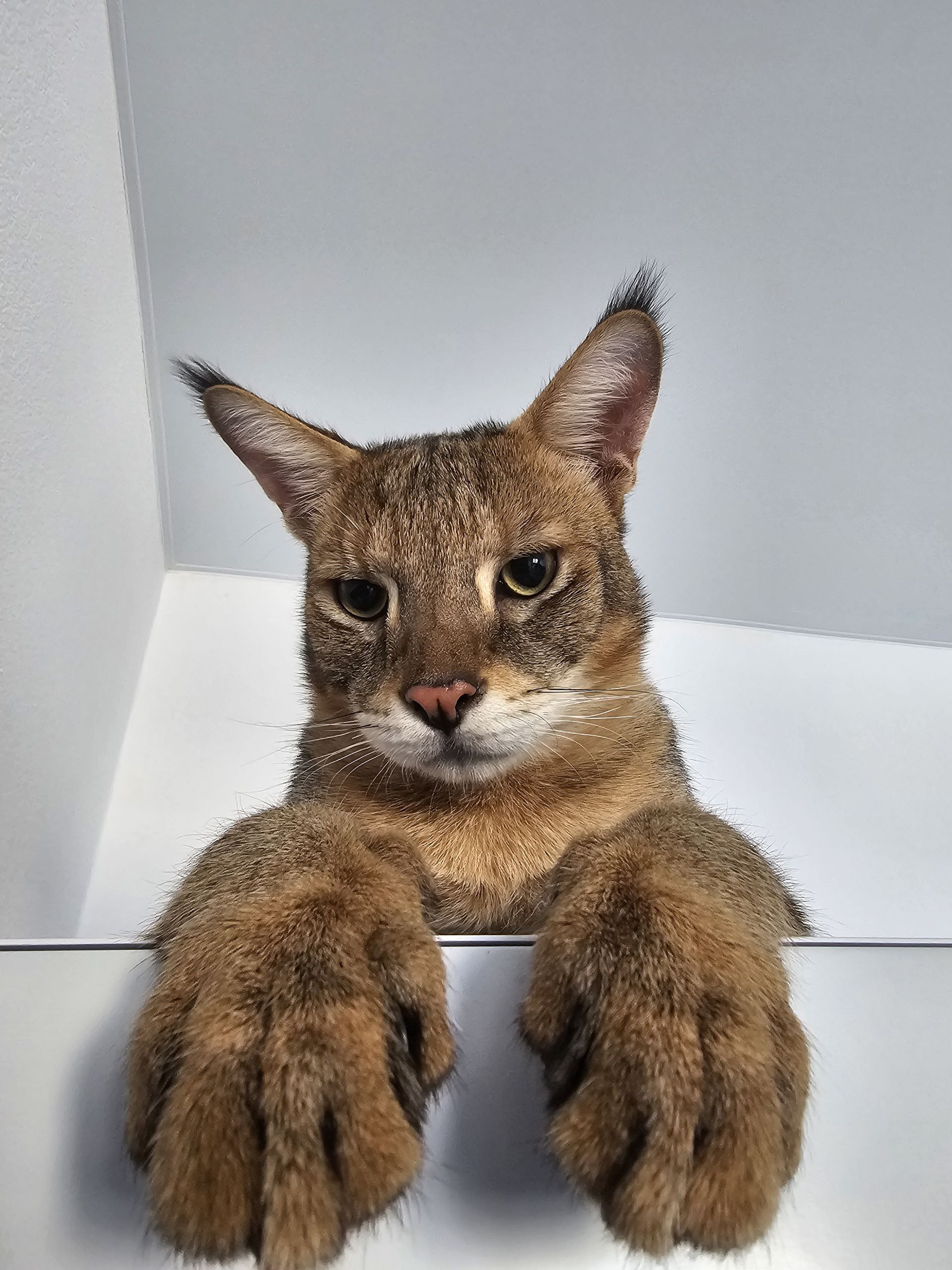
N25 — Black Ticked Tabby
The main and most common color, inherited directly from the Jungle Cat. The coat appears solid, but each individual hair is banded with multiple stripes. This color brings the Chausie's appearance closest to the wild standard.
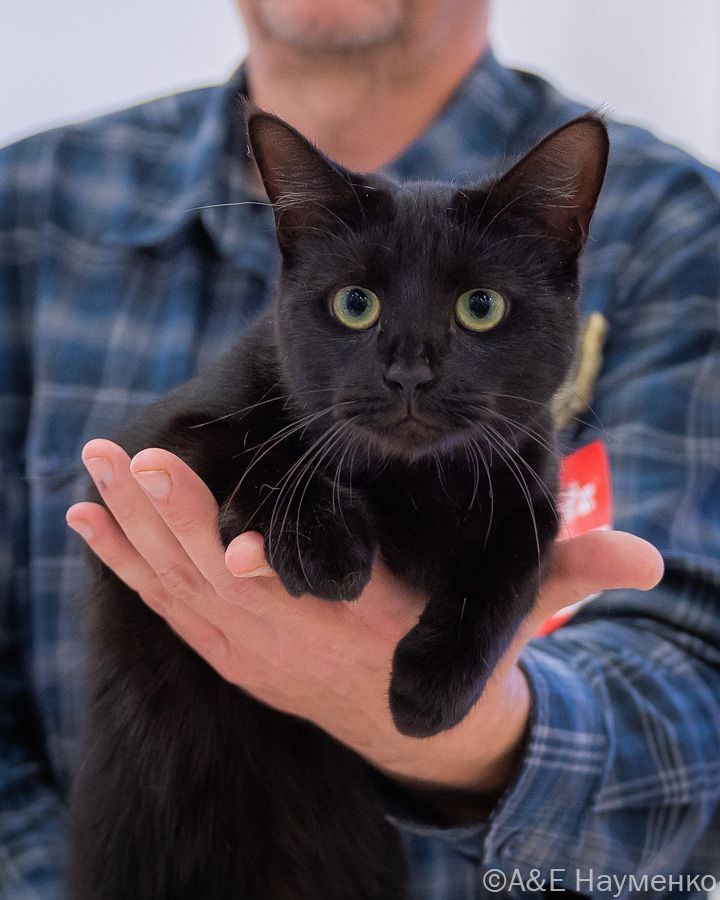
N — Black (Solid)
Classic solid black color. Dramatically highlights the Chausie's powerful, lean build.
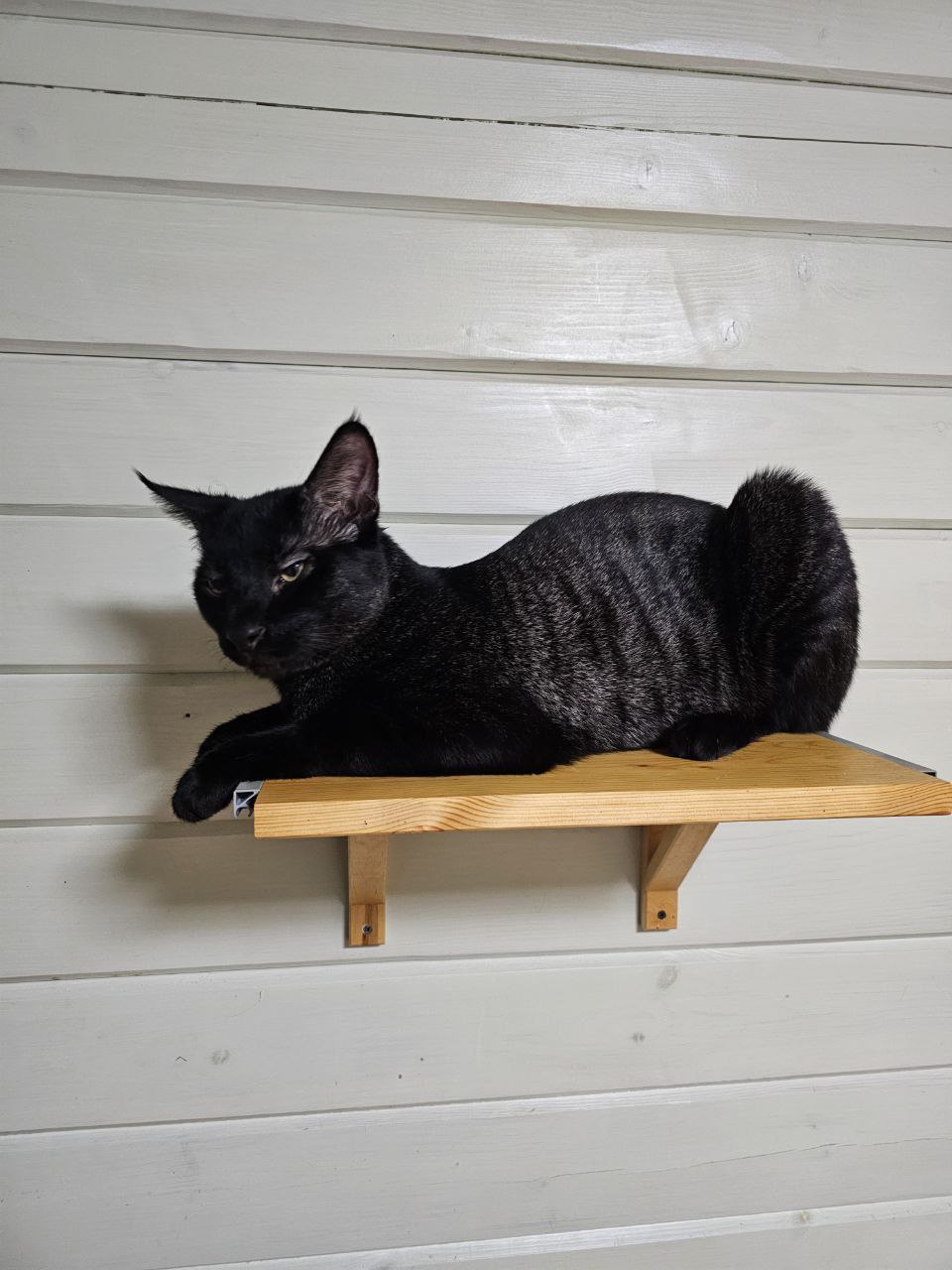
N26 — Black Grizzled Tabby
The rarest and most striking color. A silver base coat combined with ticking creates a spectacular "frosted" appearance, making the Chausie look like a mythical creature. These cats are uncommon and look truly magnificent.
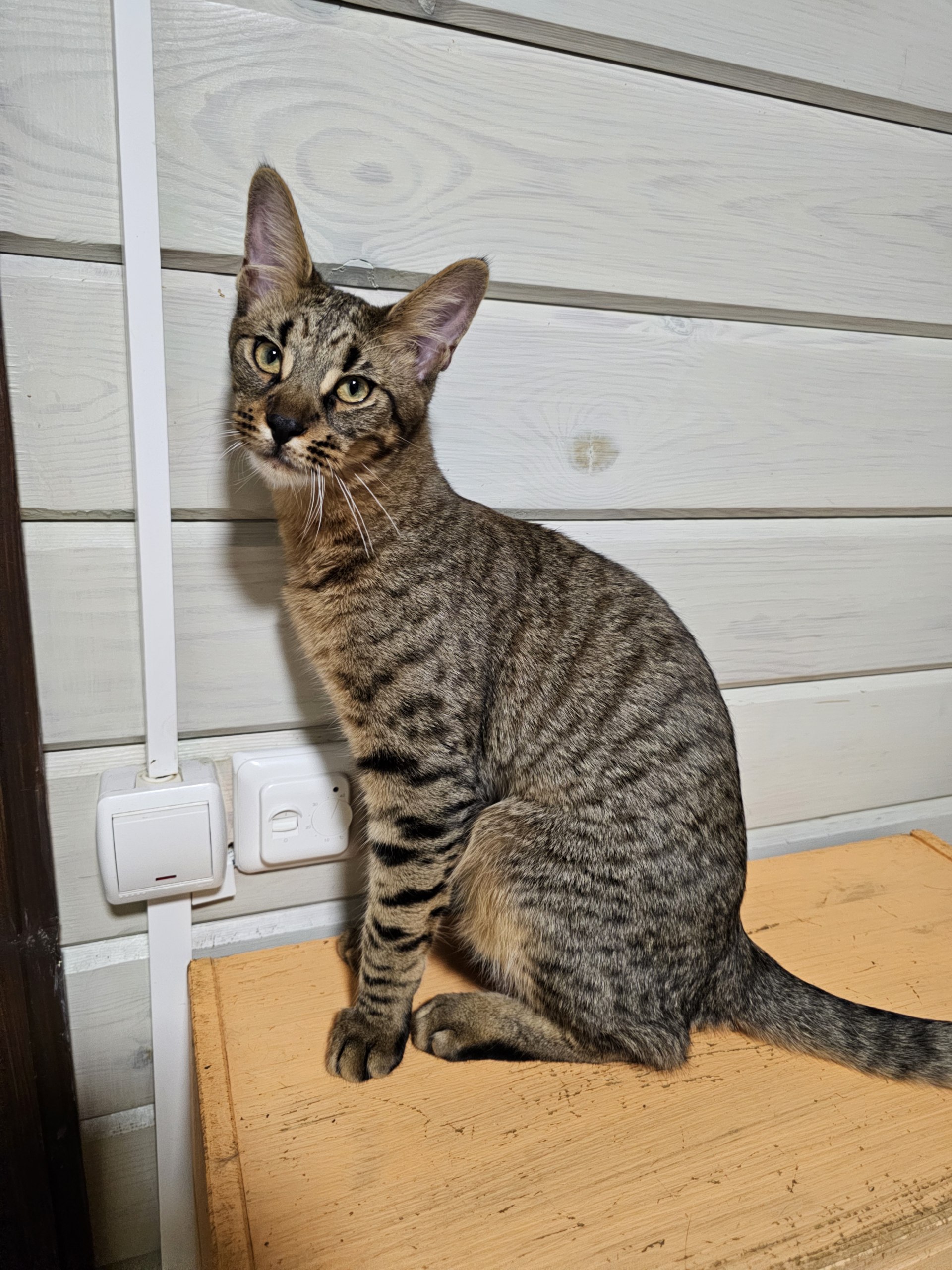
N24 — Black Spotted Tabby
Instead of even ticking, the coat is adorned with distinct dark spots or rosettes on a lighter background. This pattern resembles the coloring of wild cats — leopards or ocelots, giving the Chausie an even more exotic look. The spotted pattern can appear when tabby pattern genes from domestic ancestors are present in the line.
A25 — Blue Ticked Tabby
A diluted version of the classic ticked color: instead of black bands on each hair, a grey-blue pigment is present. The coat takes on a soft, muted ashen tone with a characteristic silver sheen. The blue color occurs when both parents carry the recessive dilute gene.
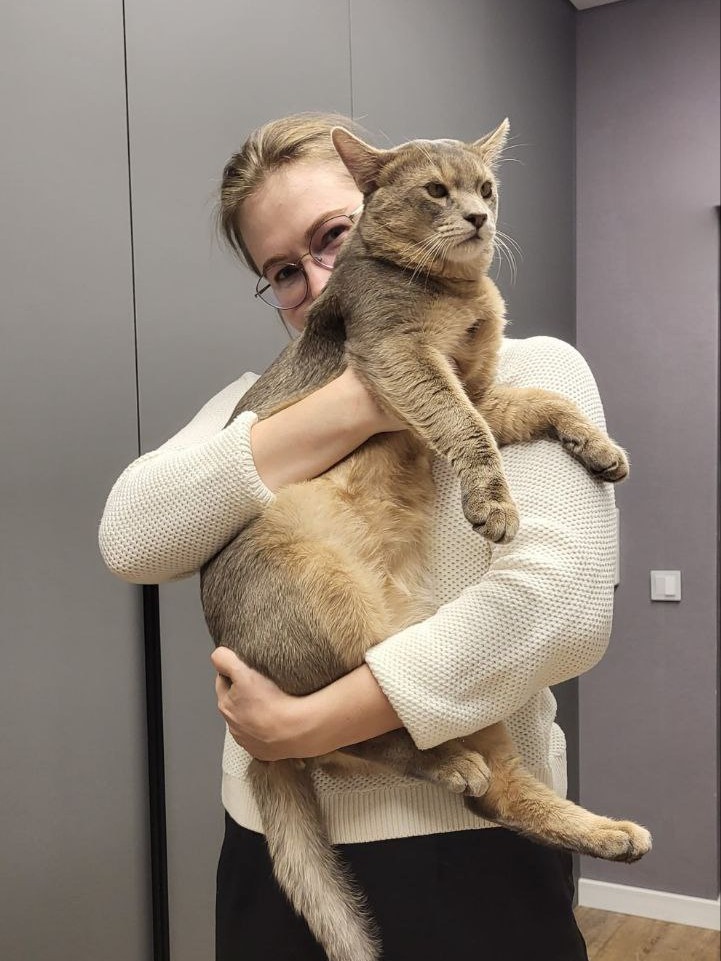
Generations F1–F4
In hybrid breeds, the percentage of wild blood is indicated by the letter F (Filial) and a number showing how far the animal is from the wild Jungle Cat. This is a key factor determining size, temperament, and care requirements.
F1 — Direct Offspring
Children of a Jungle Cat and a domestic cat (50% or more wild blood). The largest and most massive in the breed, with the most pronounced wild traits. Energetic and independent, they tend to bond strongly with one person. Require lots of space and experience in keeping.
F2 — The Golden Middle
Grandchildren of the wild cat (25% or more wild blood). They retain impressive size and lean musculature but are significantly softer in character. Playful, curious, active, and much more family-oriented.
F3 — Transition to Domestic Comfort
Great-grandchildren of the wild cat (12.5% or more wild blood). Very social and affectionate, they easily make contact. They retain the recognizable Chausie appearance and high intelligence but feel perfectly comfortable in a family setting.
F4–F6 — Fully Domestic
Less than 6% wild blood. They retain the striking Chausie appearance but possess the most comfortable and predictable temperament. Ideal for families looking for an active, intelligent, and devoted companion.
Temperament and Intelligence
Chausies stand out for their high intelligence — they think significantly faster than most domestic breeds. They quickly grasp rules, remember forbidden zones, and excellently understand their owner's intonations.
They don't just play — they solve problems: they can open doors, find clever ways to reach their goals, and love to carry objects, making them similar to dogs. Chausies bond with a specific person and follow them almost inseparably.
- • Highly active and energetic — they need regular play and physical exercise
- • Easily trainable — they learn commands, fetch, and leash walking
- • Devoted — they bond with their owner and follow them like dogs
- • Love water — a legacy of the Jungle Cat, which is an excellent swimmer
- • Get along well with cats and dogs, but small animals and birds should be kept separate
Care and Keeping
Chausies don't require complex grooming but need proper organization of active leisure.
Coat
Short dense coat with a thick undercoat. Brush every 2 weeks with a massage brush, more frequently during shedding season.
Nutrition
Natural diet based on bone-in meat (70–80%) with bone components (20–30%). The diet should be rich in protein.
Claws
Trim as needed. Scratching posts must be placed in different parts of the home.
Activity
Regular active play is essential. Laser pointer, toy mice, fetch games. Optionally — leash walks.
The most important aspect is providing activity. Chausies are not a couch breed! They vitally need space and the opportunity to use their intelligence and muscles. Boredom makes them nervous and can lead to destructive behavior.
Health
Thanks to their wild ancestor, Chausies have an excellent physical foundation and strong natural immunity. With proper breeding, these cats grow up sturdy and resilient.
Standard veterinary care is suitable: routine vaccinations, deworming every 3–6 months, and regular check-ups. During the growth period (up to one year), calcium vitamin supplements are recommended for developing strong joints and bones.
When living in a country house or with outdoor access, seasonal protection against fleas and ticks is necessary.
Home Safety
- • Windows must be protected with cat-proof screens. Tilted window ventilation without protection is strictly prohibited — cats can get stuck and die
- • Access to open balconies and the outdoors must be prevented
- • Electrical wires and fragile objects must be kept out of reach — Chausies love to conquer heights
- • Contact with small animals (rodents, birds) is highly undesirable due to their strong hunting instinct
Who Is This Breed For
Chausies are ideal for active people looking for a sociable, energetic, and intelligent pet. They are true companion cats, ready to participate in all household activities, follow their owner, and demand interaction. They fit perfectly into families that value shared play and a high activity level.
The breed is not suitable for those who dream of a calm "couch" cat dozing in a corner. Chausies require constant attention, intellectual stimulation, and sufficient space for movement. If the owner is away from home for long periods, an active and curious Chausie will get bored, which inevitably leads to behavioral problems.